The most beautiful but the most unfortunate of the seven is what is known as the psychic (Plate VI.). This in its purity of type is a very rare hand to find. The name explains itself—that which appertains to the soul. The very word seems to suggest to one’s mind the old fable of the envy of Venus toward the maiden Psyche—the war of the goddess of passion against the more spiritual charm of the daughter of the soul. In its pureness of type it is a hard hand to find: nineteenth-century civilization does not encourage such rare flowers of lily whiteness and icy purity; the calmness, coldness, and dreamy chastity of such a type are not sought after by the present-day sons of the soil, whose heads are bowed in the quest for gold, and whose blood is heated by the closeness of the cattle. But although the exact type may be hard to find, yet there are hundreds of men and women who so approach the psychic that they must be considered part of it, particularly when the customs that control our present-day life are taken into consideration. The psychic is the most beautiful hand of all. It is in formation long, narrow, and fragile-looking, with slender, tapering fingers and long, almond-shaped nails. Its very fineness and beauty, however, indicate its want of energy and strength, and one instinctively pities such hands if they have to try to hold their own in the battle of life.
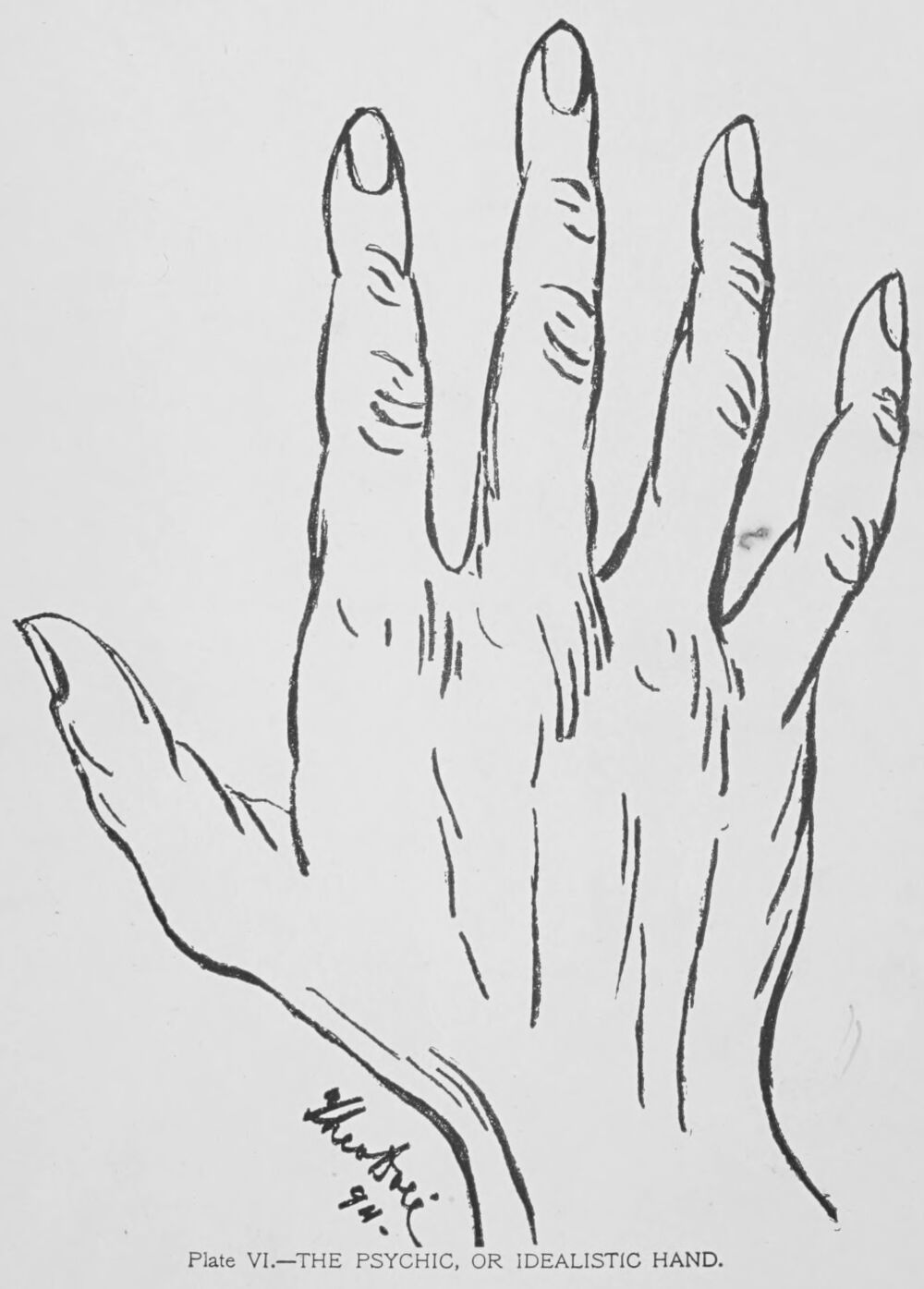
Plate VI.—THE PSYCHIC, OR IDEALISTIC HAND.
Individuals with the psychic hand have the purely visionary, idealistic nature. They appreciate the beautiful in every shape and form; they are gentle in manner, quiet in temper; they are confiding, and they instinctively trust every one who is kind to them. They have no idea of how to be practical, business-like, or logical; they have no conception of order, punctuality, or discipline; they are easily influenced by others; against their will, they are carried away by the strong rush of humanity. Color appeals to p. 41 this nature in the highest possible way; to some, every tone of music, every joy, every sorrow, every emotion is reflected in a color. This type is unconsciously a religious one; it feels what is true, but has not the power to seek truth. In religion such people will be more impressed with the service, the music, and the ceremony than with the logic or truth of the sermon. They are innately devotional, they seem to dwell on the confines of the spiritual, they feel the awe and the mystery of life, without knowing why. All forms of magic and mystery attract them; they are easily imposed upon, and yet bitterly resent being deceived. These individuals have the intuitive faculties highly developed; they are good as sensitives, mediums, clairvoyants, because they are more alive to feelings, instincts, and impressions than are their more matter-of-fact brothers and sisters.
Parents having such children generally do not at all understand how to treat them. The strange thing is that they are often the offspring of matter-of-fact, practical people. The only way in which I would account for such a fact is by the theory of balance: nature, working through hereditary laws, finds a point of balance by producing the direct opposite of the parent; thus the law of reaction produces the type under examination. Alas! too often a temperament of this kind, by the ignorance and stupidity of the parents, is forced into some business life, simply because the father is in business. The utter wrongness of the life so crushes and dwarfs the nature that very often the result of such environment is insanity or an early grave. There is no question but that the asylums of the world are largely filled by the utter inability of parents for such a position of responsibility; and the sooner this fact is recognized, the better.
Possessors of these beautiful, delicate hands, the indicators of the purely sensitive nature, usually feel their position in life so keenly that they too often consider themselves useless, and become morbid and melancholy in consequence. Such, however, is not the case; there is nothing useless that nature calls into creation; the beauty and sweetness of such temperaments are often of more use and do more good than those who, by the accumulation of this world’s goods, build a convent or endow a church. They may be placed here to establish a balance in the laws of humanity; they may be here to increase our love and appreciation of the beautiful; but they are not use p. 42 less—of that we may be assured; therefore let us encourage and help them, instead of crushing and destroying them as we too often do. Alas! in the worldly sense they are generally left far behind in the race for fame and fortune. I cannot refrain from drawing the following picture, as illustrative of such types:
They are as lilies thrown, by some ruthless hand, upon the tempest-tossed river of life—they seem so helpless in the onward sweep of that terrible current. One sees them at times clinging to the banks for pity. Ah! those beautiful hands have no strength; they are swept on again by the rising tide of bubbling, babbling, frothy humanity. A little lower, one sees them, soiled and stained, crouching beneath the shadow of some rock, trying, as it were, to look happy amid the weeds that for a moment mock the stream. Again, it is the rush of the onward tide or the wash of some passing barge that drags them from the shelter of the stone and hurries them nearer and nearer to the sea. The river is broader now, quieter, calmer, wider: we expand in our views as we leave the narrow banks of youth. See, now, as the night is nearing, how those lilies rest and dream upon the tide. The river is silent now, the rush is past, the day of life is done. See how it bears the broken flowers tenderly, as if sorry for the roughness of its early tide. All is quiet now, all is calm. Wider and wider yet it grows, calmer and yet still calmer. The end has come. The mists fall now, thicker and closer and whiter. How still it is! The silence hangs like a coldness on the heart. The river widens out into the sea, and lilies and flowers and weeds drift—it may be to the garden of God.
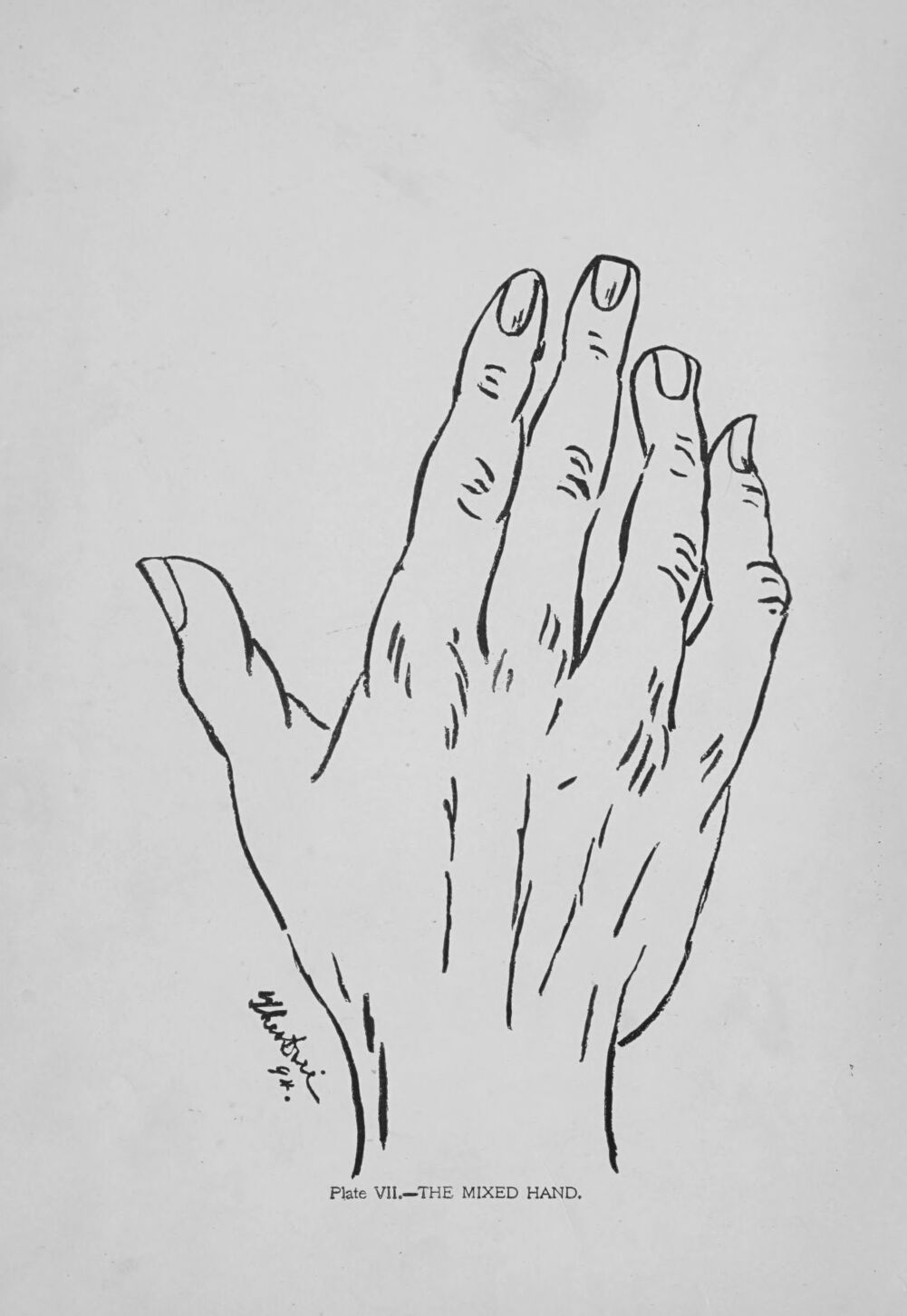
Plate VII.—THE MIXED HAND.
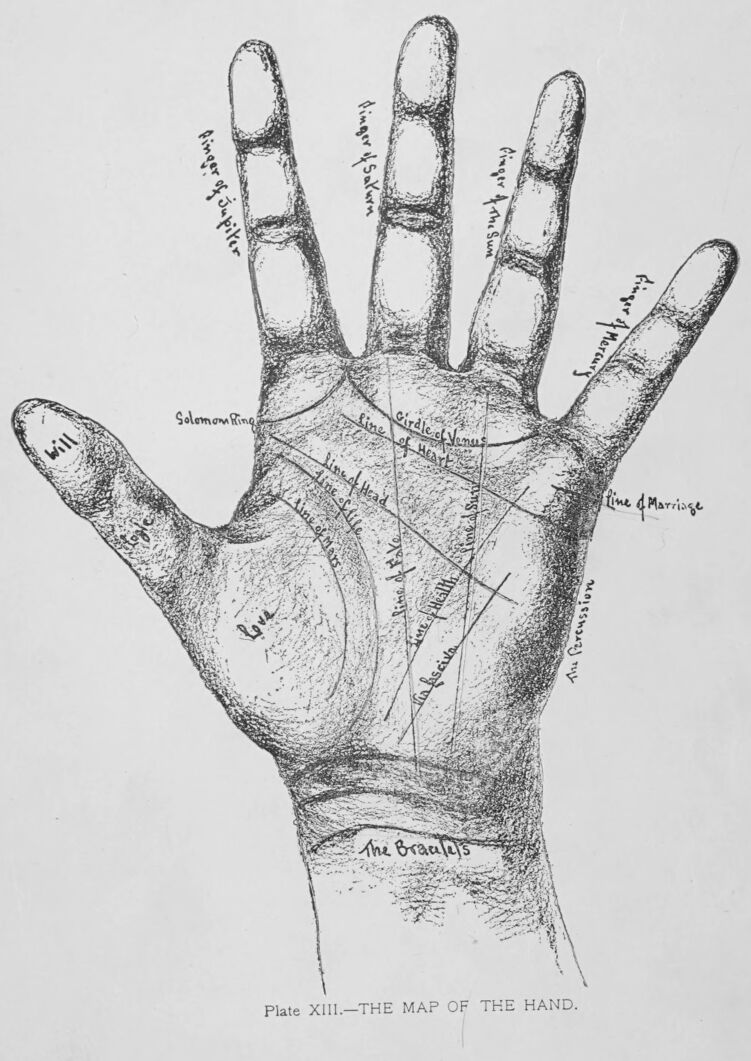
Plate XIII.—THE MAP OF THE HAND.