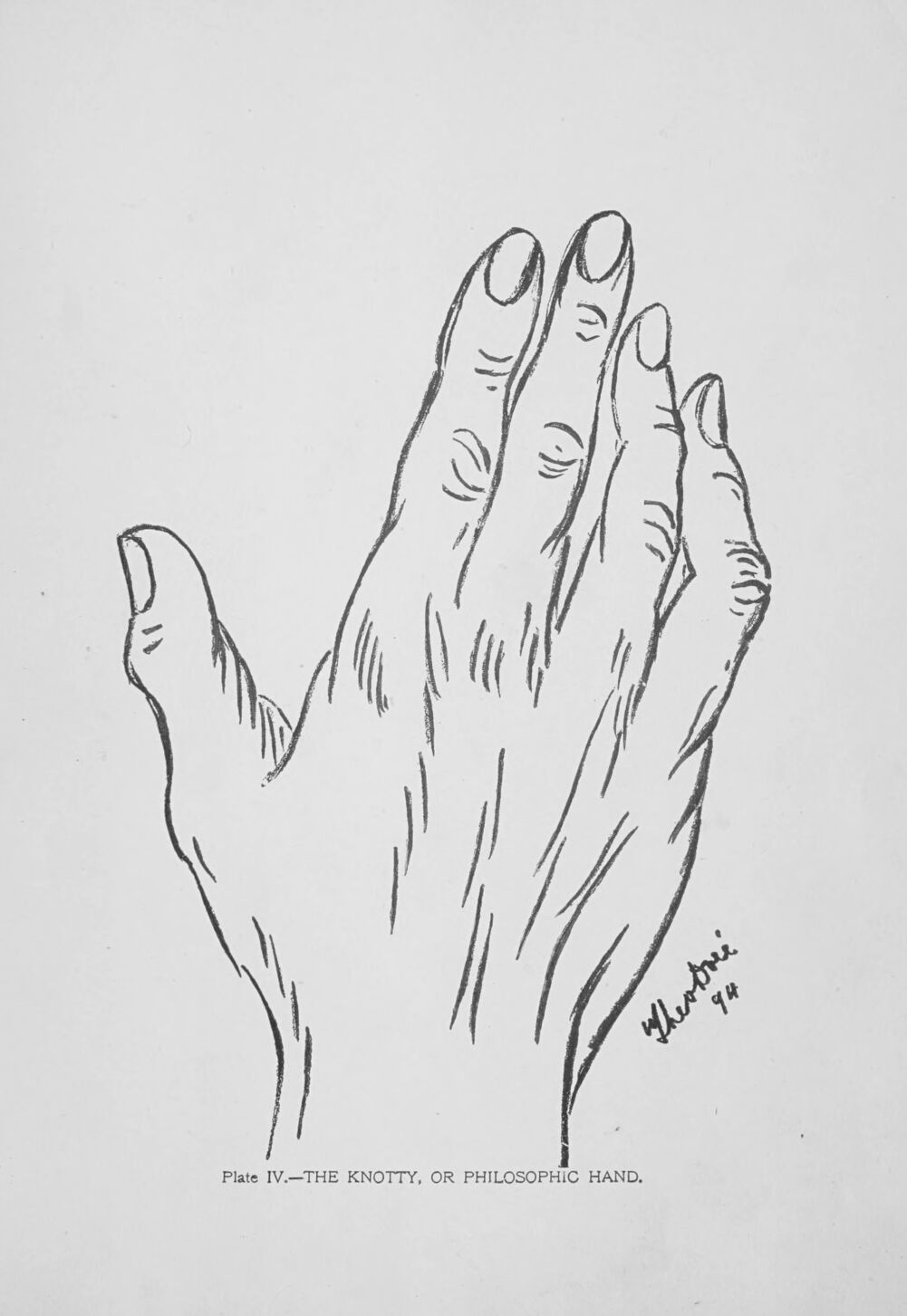
Plate IV.—THE KNOTTY, OR PHILOSOPHIC HAND.
The name of this type explains itself, the word “philosophic” being derived from the Greek philos, love, and sophia, wisdom. This shape of hand is easily recognized: it is generally long and angular, with bony fingers, developed joints, and long nails (Plate IV.). As far as success in the form of wealth is concerned, it is not a favorable type to have; it gleans wisdom, rarely, if ever, gold. People with such a type are, as a rule, students, but of peculiar subjects. They study mankind; they know every chord and tone in the harp of life; they play upon it, and are gratified with its responsive melody more than with the clink of coin. In this way they have as much ambition as other types of humanity, only theirs is of a different kind, that is all. They like to be distinct from other people, and they will go through all kinds of privations to attain this end; but as knowledge gives power, so does the knowledge of mankind give power over man. Such people love mystery in all things. If they preach, they preach over the heads of the people; if they paint, they are mystic; if they are poets, they discard the dramatic clash and color of life for the visionary similes and vaporish drapings of the spirit. Theirs is the peace of the æsthetic; theirs the domain beyond the borderland of matter; theirs the cloudland of thought, where the dreaded grub-worm of materialism dare not follow. Such hands are found very largely among the Oriental nations, particularly in India. The Brahmans, Yogis, and other mystics possess them in great numbers. In England, striking examples are found in the hands of Cardinal Newman, Cardinal Manning, and Tennyson. They are also largely seen among the Jesuits of the Catholic Church, rarely in the English Church, and more rarely still in Baptists, Presbyterians, and Independents. In character they are silent and secretive; they are deep thinkers, careful over little matters, even in the use of little words; they are p. 35 proud with the pride of being different from others; they rarely forget an injury, but they are patient with the patience of power. They wait for opportunities, and so opportunities serve them. Such hands are generally egotistical, which is in keeping with the life they lead. When in any excess of development they are more or less fanatical in religion or mysticism. Of this the most wonderful examples are found in the East, where from the earliest childhood the Yogi will separate himself from all claims of relationship and kindred, and starve and kill the body that the soul may live. I differ in my definition of this type very largely from the modern writers on palmistry. I fear it has been too often the case that the writer on this subject has followed too closely what other authorities have said, without taking the trouble to follow out his own observations. The greatest injury that has been done to palmistry has been done in the nineteenth century, by the “lady and gentleman” writers of the day. Such people read a few books, devote sometimes a few months, sometimes less, to the study as a fad, or as something by which to make a tinsel reputation of being interesting, then they write their names to a book and disappear into the whirl of society from whence they came. Only this week I read a pamphlet written by a lady who eight months ago did not know a line on the hand, but to-day she comes forward as an exponent of palmistry, and, having mixed up the types in her brain, writes that the square hand with short fingers is the hand of poetry and idealism. In this work I have endeavored to keep an unbiased mind toward the difference of opinion on this or that in connection with the study. When I have come in contact with an opinion in opposition to my own, I have carefully considered all points for and against, and before deciding in any direction I have taken time to examine often hundreds of hands before coming to a conclusion on even the smallest point. When one considers the opportunities placed at my disposal, not only in one country, but in almost every country in the world, he will more readily understand that there is some likelihood of my being, not infallible, but fairly accurate.
With these hands, therefore, it must be borne in mind that the developed joints are the peculiar characteristic of thoughtful people, while the smooth, pointed fingers are the reverse. Again, such a development gives the love of analyzing, but it is the shape or type of hand which determines whether that p. 36 power of analysis be for chemicals or for mankind. The end of the finger being square and conic combined gives the solemn tone to their inspiration and fits them specially for the religious thought or the mysticism with which, as a rule, they become associated. Again, these hands, in the pursuit of what they consider truth, will have the patience of the square type, with that love of self-martyrdom which is the characteristic of the conic. It is the blending of these almost opposite characteristics which brings about the peculiar ideas that make men and women with the philosophic type of hands so different from the practical drones in the vast hive of humanity.
Plate V.—THE CONIC, OR ARTISTIC HAND.